Kurjey Tshechu
- Kind
- Tshechu
- Venue
- Kurjey Lhakhang
- District
- Bumthang
- Region
- Central Bhutan
When it happens
Kurjey Tshechu is a summer festival of a single day.
Where it happens
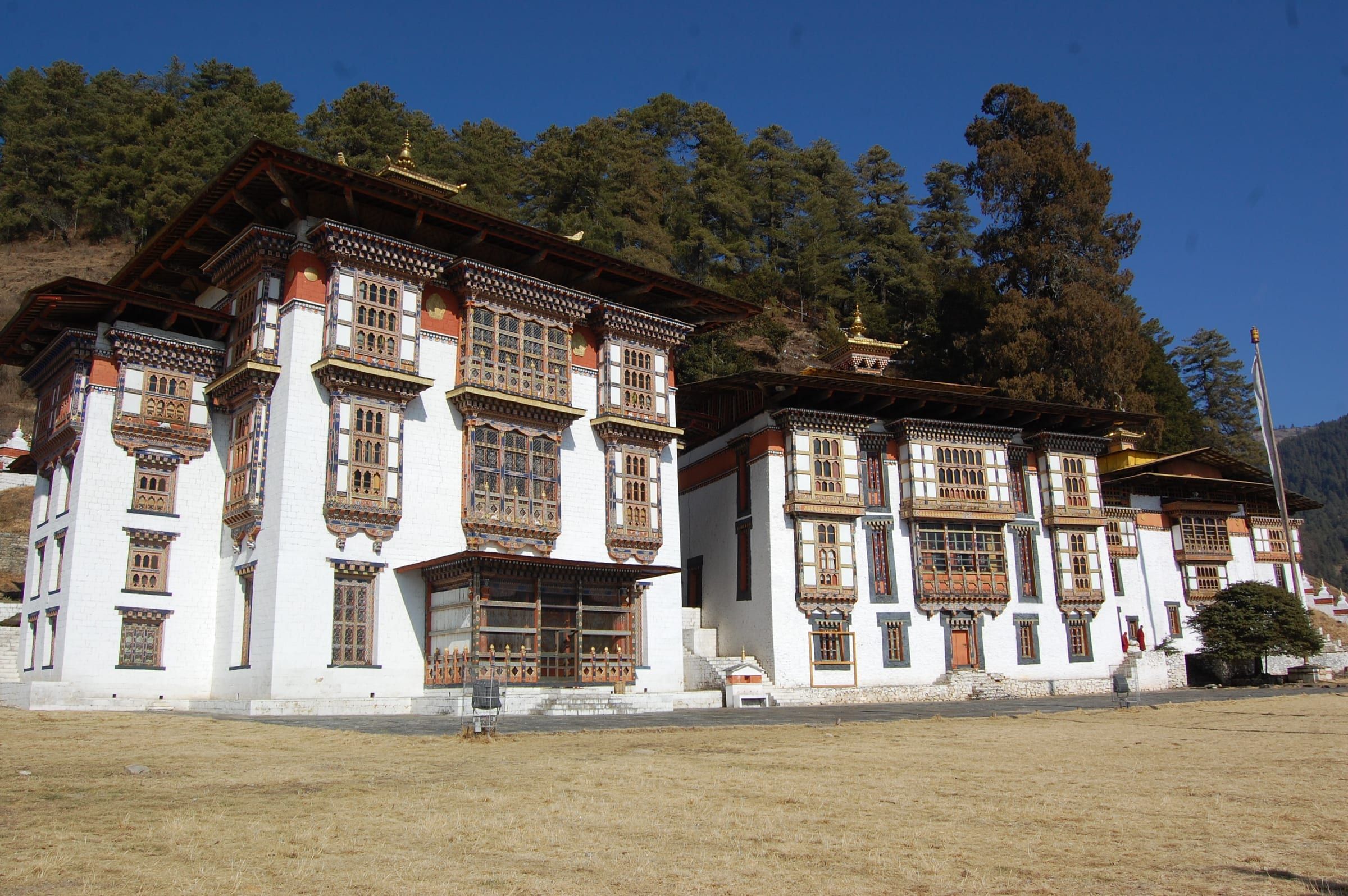
Kurjey Lhakhang stands in the Choekhor valley of Bumthang. It is one of Bhutan’s holiest temples.
The temple takes its name from an imprint in the rock of its cave, said to be the imprint of Guru Rinpoche’s body. Kur means body, and jey means imprint.
Three temples from different eras stand around the sacred cave: the Guru Lhakhang, the Sampa Lhundrup Lhakhang and a third temple.
History
According to tradition, when King Sindhu Raja of Bumthang fell ill in the 8th century, Guru Rinpoche was invited to cure him. Meditating in the cave, Guru Rinpoche is said to have subdued the powerful local deity Shelging Karpo and left the body imprint that names the site. A tall cypress behind the Guru Lhakhang is said to have grown from his walking stick, planted in the ground.
The Guru Lhakhang, the oldest of the three temples, dates to 1652. Ugyen Wangchuck, Bhutan’s first king, built the Sampa Lhundrup Lhakhang in 1900, which ties the site directly to the founding of the Wangchuck dynasty. The Queen Mother added the third temple in 1984.
Dances and rituals
The day centres on sacred mask dances at Kurjey Lhakhang in honour of Guru Rinpoche, the eighth-century master credited with bringing Buddhism to Bhutan.
Kurjey Tshechu is often described as a pilgrimage-led festival that draws worshippers to the cave and its temples rather than to a dzong (fortress) courtyard, and as smaller and more intimate than Paro Tshechu or Thimphu Tshechu.
Being there
Kurjey Lhakhang is usually described as lying just north of Jakar, close to Jambay Lhakhang and only a few kilometres from the district seat.