Talo Tshechu
- Kind
- Tshechu
- Venue
- Talo Goenpa
- District
- Punakha
- Region
- Western Bhutan
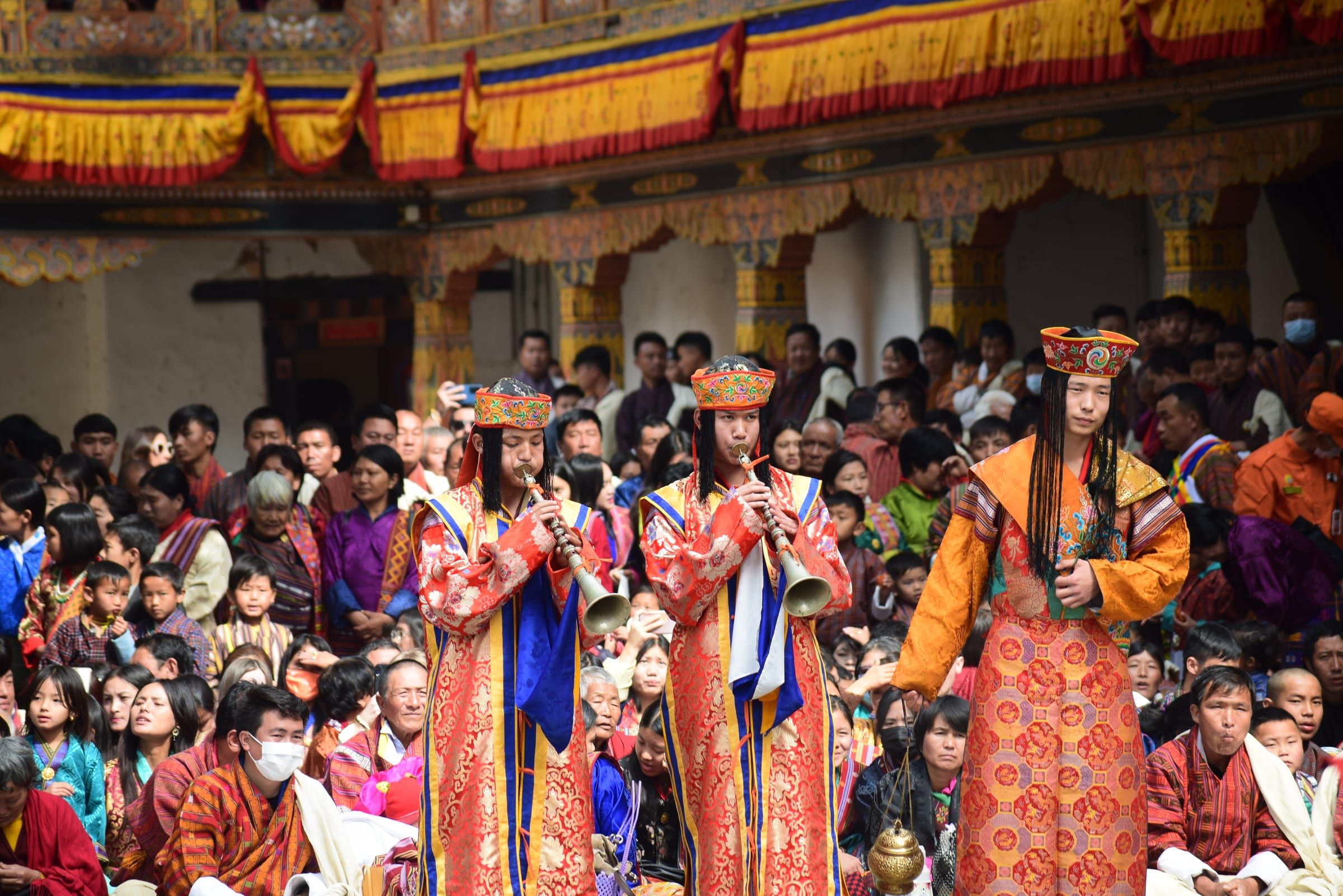
When it happens
Talo Tshechu is held every year and lasts three days. It falls in spring, usually in late March, at the end of the first spring month. Each of the three days closes with one of the Mani Sum songs.
Where it happens
Talo Goenpa (a monastery), also called Talo Sangnacholing, sits on a ridge overlooking the Punakha valley. The mask dances and folk dances are performed in the goenpa’s courtyard.
History
Lama Thripa, a son of Zhabdrung Ngawang Namgyal, founded the monastery. It became the ancestral seat of the Talo Gung family, from which Bhutan’s Queen Mothers descend. The Mani Sum songs are attributed to Meme Sonam Dhondup.
Dances and rituals
Talo Tshechu is known for its mask dances and atsara (clown) dances, and for zhungdra (classical songs) performed by the Talo dance troupe.
Talo Tshechu’s signature songs are the Mani Sum, three sacred songs. According to tradition, only Talops (villagers of Talo) may learn them, and performing them improperly is said to invite misfortune.
About two weeks before the festival, lay monks and elderly women gather at Gangsa Pang to bless and rehearse the mask dances and folk songs before they are staged in the goenpa’s courtyard.
Being there
Talo Goenpa is roughly a 30–40 minute drive from Punakha town and about two hours by road from Thimphu. This is a small community festival, attended mainly by the villagers of Talo and nearby villages, unlike Paro Tshechu and Thimphu Tshechu, which are large festivals.