Jomolhari Mountain Festival
- Kind
- Modern festival
- Venue
- Dangochong
- District
- Thimphu
- Region
- Western Bhutan
- Tentative
The tentative festival calendar lists it as Jhomolhari Mountain Festival.
Attend Jomolhari Mountain Festival with Little Bhutan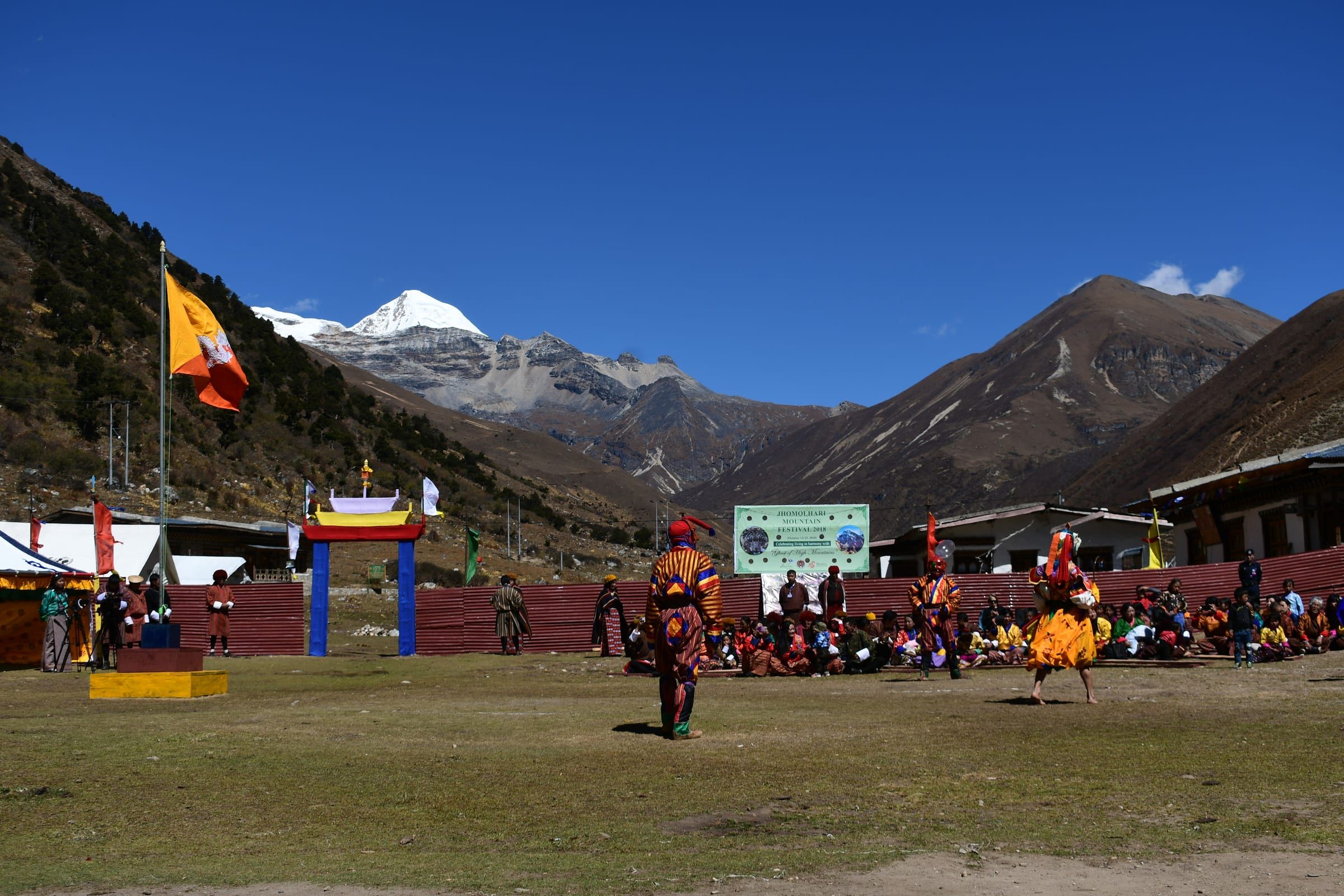
When it happens
The festival is held every year in mid-October, by the Gregorian calendar rather than a lunar one, and it lasts two days.
Where it happens
The festival ground is at Dangochong, in Soe in upper Thimphu. It lies at the base of Mount Jomolhari inside Jigme Dorji National Park, beside the Jangothang base camp area. Jangothang base camp sits at about 4,080 m.
The festival gathers the highland herding communities of the Jomolhari trek: Soe, Yaksa, Lingzhi and neighbouring Tsentok in Paro.
The Jomolhari region around the ground is one of Bhutan’s most important snow leopard habitats, as camera-trap photos, signs and DNA sampling have established. A nationwide estimate in 2017 counted 96 snow leopards in Bhutan, and a 2016 survey recorded more than 24 in the Lingzhi area.
History
The festival was first held in 2013. Jigme Dorji National Park, under the Department of Forest and Park Services, started it. In its early years, the park organised the festival with financial support from the Tourism Council of Bhutan and the Bhutan Foundation.
Throughout, the festival has run as a community-based snow leopard conservation initiative, led by the highland communities together with Jigme Dorji National Park and the Snow Leopard Conservancy.
What happens
Traditional highland songs and dances, performed by the communities themselves, are at the centre of the festival. It is a conservation and community celebration rather than a cycle of cham (sacred masked dances). Alongside the performances, the two days have friendly highland competitions and community games.
The whole festival is themed on the snow leopard, the “ghost of the high mountains”. A stated purpose of the festival is to raise awareness of snow leopard conservation and to secure local people’s support for it. The snow leopard is valued as an indicator species of the health of mountain ecosystems.
Being there
No road reaches the festival ground. You can get there only on foot along the Jomolhari trek, which begins near Paro at Shana and Gunitsawa. From the Shana trailhead it is roughly two days’ walk to the Jangothang base camp area beside the ground.
The route crosses high alpine terrain, with passes reaching about 4,890 m, so you need to be acclimatised and equipped for cold. The trek passes an army checkpoint and requires a licensed Bhutanese guide and trekking and park permits. Autumn, from September to November, is a prime season for it.