Lhuentse Tshechu
- Kind
- Tshechu
- Venue
- Lhuentse Dzong
- District
- Lhuentse
- Region
- Eastern Bhutan
- Tentative
- Tentative
When it happens
Lhuentse Tshechu lasts five days.
Its lunar month sits across the Gregorian new year, so its dates move from year to year, and the five days fall between mid-December and early January. Because they can land on either side of the new year, a Gregorian year can pass with no Lhuentse Tshechu.
The thongdrel is displayed on the last day.
Where it happens
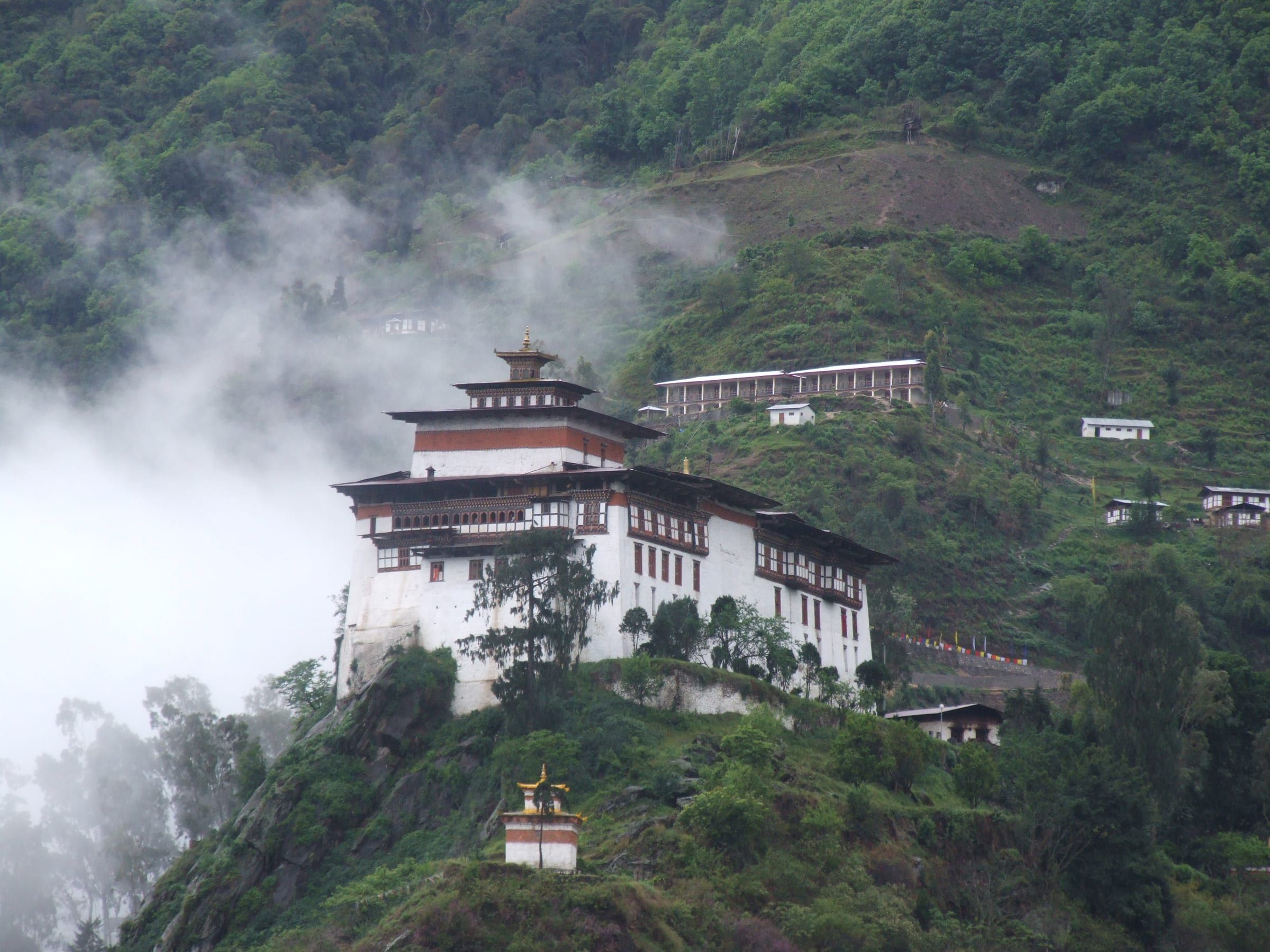
The festival is held in the courtyard of Lhuentse Dzong. The dzong (fortress) sits on a hill above the Kurichhu river. Its names are Lhuendruptse gi Dzongchen and Lhuendrup Rinchentse. Today it is the office of the district’s administrative and religious body.
The dzong’s most sacred object is a bronze statue of Tshepamey. It was found in a local fisherman’s net and had earlier been kept at Kidlung Lhakhang.
History
Yongzin Ngagi Wangchuk meditated where the dzong now stands, and in the mid-sixteenth century he built a small temple there. According to tradition, a local deity directed him to build it, appearing to him as a white goat, and he took its bleating as an auspicious sign.
Trongsa Penlop Minjur Tenpa later built the dzong that stands today, and Desi Tenzin Rabgye installed many of its sacred relics. An earthquake in eastern Bhutan seriously damaged the dzong in September 2009. Its renovation was completed in October 2013, with the outer appearance kept as before.
Lhuentse Tshechu is held in Kurtoe, the ancestral district of the Wangchuck dynasty. Dungkar village is the monarch’s ancestral hometown, and Dungkar Choeje Lhakhang is the birthplace of the dynasty. Jigme Namgyal was born at Nagtsang Lhakhang in Dungkar.
Being there
Lhuentse is reached by road from Mongar, on the 65 km highway between the two towns. If you fly into eastern Bhutan, the closest domestic airport is Yonphula.
Accommodation in Lhuentse is simple guesthouses and family-run homestays.
Khoma, about 11.5 km east of the district headquarters, is Lhuentse’s weaving centre. The district is known for its traditional weaving, especially the Kishuthara textile. Khoma is a short hike from the main road, and you can watch the weaving and buy textiles directly from the weavers.
Dungkar, the monarch’s ancestral village, is about a three-hour drive from the district headquarters on 45 km of unpaved road.
A statue of Guru Nangsi Zilnoen, a form of Guru Rinpoche, stands at Takila. It was consecrated in November 2015.