Samdrup Jongkhar Tshechu
- Kind
- Tshechu
- Venue
- Samdrup Jongkhar
- District
- Samdrup Jongkhar
- Region
- Eastern Bhutan
- Tentative
- Tentative
When it happens
Samdrup Jongkhar Tshechu falls in the 11th month of the Bhutanese lunar calendar. That month straddles the end of the Gregorian year, so the festival lands in late December in some years and in January in others. Some Gregorian years have no Samdrup Jongkhar Tshechu at all, because the next one falls in the following January.
Tshechu means “tenth”, a day held to be highly auspicious, but the three main days fall on the 13th, 14th and 15th of the month, not on the tenth. A khrus (ablution) observance on the 11th and a chamju (a full run-through of the dances) on the 12th come before them, making five days in all.
Where it happens
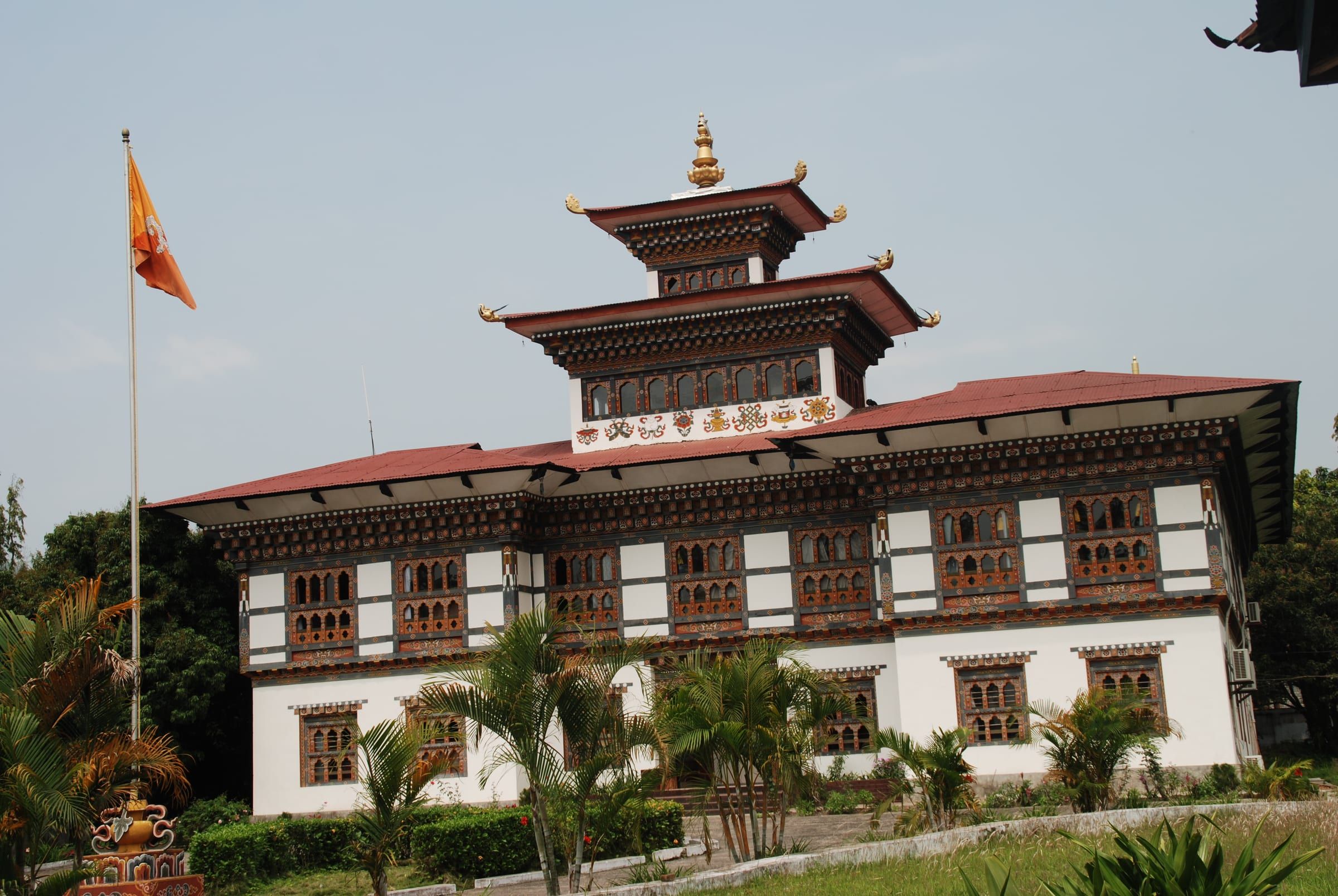
The festival is held in the town of Samdrup Jongkhar, within the precinct of the Rabdey (the district monastic community). Within it, the observance moves between the zigraykhang (the lama’s viewing room), the Rabdey’s main gate and the dochal (the paved courtyard) where the thongdrel (a giant appliqué scroll image) is hung.
Samdrup Jongkhar district sits in the south-eastern corner of Bhutan, with the Indian state of Assam along its southern border, Pemagatshel to the west and Trashigang to the north. It is the gateway and commercial hub for five eastern districts.
History
The region now covered by Pemagatshel and Samdrup Jongkhar was formerly known as Dungsam, a name still used officially and locally. The district’s tshechu programme still places the festival in Dungsam.
From the time of the Zhabdrung, Dungsam was recognised as one of Bhutan’s four gateways. Shar Dungsamkha was the eastern gateway, and Dungsam was well known as eastern Bhutan’s trade route to India.
Until 1970 the town was known as Dungsam Kothri. Dudjom Rinpoche gave it the name Samdrup Jongkhar, on the same visit on which he named neighbouring Pemagatshel.
The tshechu itself is young. It has been held since 1990, which makes it younger than the town’s name. It is also called Samjong Tshechu, after SAMJONG, the district’s registered mark.
Dances and rituals
The thongdrel is the festival’s climax. It is a Guru Tshengye Thongdrel, an image of the eight manifestations of Guru Rinpoche.
Being there
Samdrup Jongkhar is one of Bhutan’s four land border entry points, with Samtse, Phuentsholing and Gelephu. The Department of Tourism runs a visitor information centre at each of them. An immigration check post at Darranga in Assam, 700 metres from the Samdrup Jongkhar border gate, opened the gate as an entry and exit point for international tourists. If you cross here by land and plan to travel beyond the border towns, you need a guide certified by the Department of Tourism, who must accompany you at all times. You also need a guide to enter a dzong (fortress) or monument. Guwahati is described as roughly a three-hour drive from the border.
The nearest domestic airport is Yonphula, on the road north towards Trashigang.